Banned gambling win shocker! A woman who banned herself snuck in and won a massive jackpot but is now facing legal consequences after being caught.

Woman Who Banned Herself from Gambling Snuck into Casino and Won Jackpot Before Being Escorted Out by Police – people.com

Banned Gambling Win: 7 Shocking Details About the Woman Who Beat the System
Banned Gambling Win stories usually end in disappointment, but this particular case is a wild ride of luck and legality. Imagine banning yourself from every casino in the state, only to sneak back in and hit the jackpot.
This story, which recently trended on People.com, highlights the thin line between a desperate gamble and a massive windfall.
For many, the idea of a banned gambling win sounds like a movie plot. However, for one woman, it became a legal nightmare wrapped in a financial miracle.
- The Anatomy of a Banned Gambling Win
- Why a Banned Gambling Win Creates Legal Chaos
- The Psychology Behind the Banned Gambling Win
- How to Avoid the Risks of a Banned Gambling Win
- Comparing Physical Casinos and Online Safety
- The Final Verdict on the Banned Gambling Win Case
- Responsible Gaming in 2026
The Anatomy of a Banned Gambling Win
A banned gambling win occurs when an individual who has officially entered a self-exclusion program wins a prize while trespassing.
Self-exclusion is a tool designed to help those with gambling addictions by legally banning them from casino premises.
In this specific case, the woman had voluntarily signed away her right to enter the facility to protect her finances and mental health.

Despite the ban, the temptation proved too strong, leading her to sneak past security and find a slot machine.
The result was an immediate, massive jackpot that triggered alarms throughout the casino floor.
The irony of a banned gambling win is that the very success of the bet is what leads to the player’s discovery.
When the jackpot hits, security is notified, and the identity of the winner is verified immediately.
For this woman, the joy of the win lasted only a few minutes before the police arrived to escort her out.
This incident proves that while luck can be random, the law is usually quite rigid regarding self-exclusion laws.
Most jurisdictions view a banned gambling win as a violation of a legal agreement, rendering the winnings void.
This brings up a critical question: does the casino have the right to keep the money, or does the winner deserve the payout?
In most states, the casino is legally obligated to refuse the payout to protect the self-excluded individual.
Why a Banned Gambling Win Creates Legal Chaos
A banned gambling win creates a complex legal battle between the player’s right to the money and the state’s commitment to responsible gaming.
When a person self-excludes, they are essentially signing a contract stating they will not enter the premises.
By sneaking back in, the person is committing trespassing, which is a criminal offense in many regions.
The banned gambling win then becomes a piece of evidence in a criminal case rather than a simple financial transaction.
Courts often have to decide if the “unjust enrichment” of the casino outweighs the “illegal act” of the gambler.
If the court finds the gambler was in violation of the law, the banned gambling win is typically forfeited to the state or the house.
This creates a paradox where the most successful bet of a person’s life becomes the catalyst for their arrest.
Many legal experts argue that paying out a banned gambling win would encourage other addicts to risk trespassing for a chance at a jackpot.
Therefore, the strict enforcement of these rules is seen as a public health necessity.
According to Wikipedia, problem gambling is a serious condition that requires systemic support and strict boundaries.
The police escorting the woman out serves as a stark reminder that these boundaries are not suggestions.
Even if the win is in the millions, the legal repercussions of the banned gambling win can be devastating.
From fines to potential jail time for trespassing, the cost of the win far exceeds the value of the payout.
The Paper Trail of a Banned Gambling Win
Every banned gambling win leaves a digital footprint that is nearly impossible to erase.
Modern casinos use facial recognition and ID verification to ensure that banned individuals cannot enter.
When a banned gambling win occurs, the system flags the account or the machine’s location instantly.
Who Actually Profits from a Banned Gambling Win?
In most instances, the casino does not keep the money for profit but returns it to the state’s gaming commission.
The banned gambling win becomes a “void” transaction, meaning it technically never happened in the eyes of the law.
This prevents the casino from being seen as rewarding illegal behavior.
The Psychology Behind the Banned Gambling Win
The drive to achieve a banned gambling win often stems from a psychological phenomenon known as the “big win” fantasy.
Individuals struggling with addiction often believe that one massive win will solve all their financial problems and allow them to quit.
This cognitive distortion leads them to risk everything, including their freedom, just to get one more spin.
The rush of adrenaline associated with a banned gambling win is an intoxicating mix of risk and reward.
However, the crash that follows the police intervention is often a crushing emotional blow.
The woman in this story likely felt a momentary sense of triumph followed by immediate panic.
This cycle is why self-exclusion is so important; it removes the choice from the individual when they are at their most vulnerable.
When a banned gambling win happens, it validates the addiction’s lie that “luck” is a viable strategy for recovery.
Therapists argue that the tragedy isn’t the loss of the money, but the relapse in the person’s recovery journey.
The banned gambling win serves as a trigger that can lead to further risky behavior.
It reinforces the idea that the rules can be cheated, even if the result in this case was a police escort.
Understanding this psychology is key to creating better support systems for those who struggle with betting.
The desire for a banned gambling win is rarely about the money and almost always about the dopamine hit.
This is why the physical removal of the person from the environment is the only effective immediate solution.

How to Avoid the Risks of a Banned Gambling Win
The best way to avoid the fallout of a banned gambling win is to strictly adhere to self-exclusion protocols.
If you feel the urge to gamble despite a ban, it is crucial to seek professional help immediately.
Many people try to find loopholes, but the modern security apparatus makes a banned gambling win almost impossible to collect.
Instead of risking arrest, individuals should look into sustainable ways to manage their finances.
For those who enjoy gaming in a controlled environment, choosing reputable platforms is essential.
For example, exploring sites like 5bet can provide insights into how modern platforms handle user limits.
Setting strict deposit limits is a great way to prevent the desperation that leads to a banned gambling win attempt.
Another strategy is to use software that blocks access to all gambling-related websites and apps.
By removing the temptation, the desire for a banned gambling win begins to fade over time.
Community support groups provide a safe space to discuss the urges that lead to illegal casino entries.
Remember that no amount of money from a banned gambling win is worth the legal trouble and mental anguish.
The risk of being escorted out in handcuffs is a price too high for a few minutes of excitement.
Focusing on long-term stability is far more rewarding than chasing a banned gambling win.
Education on the risks of gambling is the first step toward a healthier relationship with gaming.
Comparing Physical Casinos and Online Safety
Physical casinos have security guards and cameras, making a banned gambling win a high-risk venture.
Online casinos, on the other hand, use KYC (Know Your Customer) protocols to prevent banned users from creating new accounts.
While a banned gambling win in a physical casino ends with police, an online version ends with a frozen account.
In both cases, the result is the same: the money is not paid out.
Digital platforms often have better tools for self-exclusion, such as “cool-off” periods.
Users can look at options like betfury.io to see how different interfaces handle user experience and security.
The ability to set an automatic ban is a powerful tool in preventing the impulse to chase a banned gambling win.
However, some users try to bypass these systems using VPNs or fake identities.
Sophisticated AI can now detect these patterns, ensuring that a banned gambling win remains a rarity.
The industry is moving toward a model where player protection is prioritized over short-term profit.
This shift is beneficial because it reduces the number of people risking their lives for a banned gambling win.
Safety measures are not meant to punish the player but to protect them from their own impulses.
Whether online or offline, the rules regarding a banned gambling win are designed for the user’s own good.
When the system works, it prevents the tragedy of a person losing their freedom over a slot machine.
The Final Verdict on the Banned Gambling Win Case
The story of the woman who won a jackpot while banned is a cautionary tale for everyone.
It highlights the fact that a banned gambling win is not a “win” at all, but a legal trap.
The police intervention was the inevitable conclusion to a sequence of poor decisions.
While the public might find the story “shocking” or “lucky,” the reality is far more grim.
The woman didn’t “beat the system”; she simply triggered a system designed to catch her.
A banned gambling win is a mirage that disappears the moment the payout is requested.
The legal precedent set by these cases ensures that self-exclusion is taken seriously by both the state and the casinos.
It sends a clear message: if you are banned, do not enter, regardless of the potential payout.
The “luck” of the jackpot is negated by the “misfortune” of the arrest.
This case will likely be cited in future legal disputes regarding the validity of a banned gambling win.
It serves as a reminder that the law does not reward those who break the rules, even if they are lucky.
Ultimately, the banned gambling win was a catalyst for the woman to face the reality of her addiction.
Hopefully, the experience will lead her toward a path of recovery and stability.
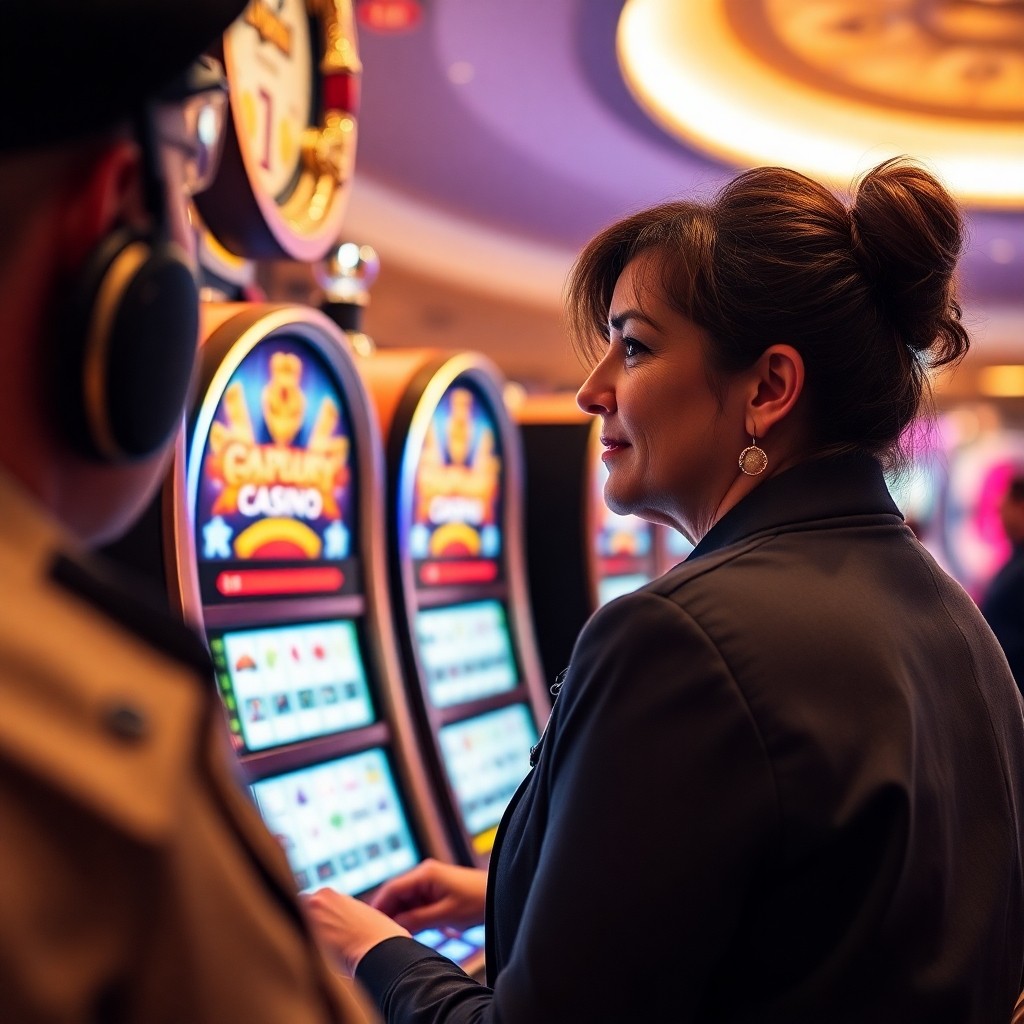
Responsible Gaming in 2026
As we move through 2026, the technology for preventing a banned gambling win is becoming more advanced.
Biometric scanning is becoming standard in most land-based casinos to stop banned individuals at the door.
This means the “sneaking in” method used in this banned gambling win story will soon be impossible.
We are seeing a global trend toward more ethical gambling standards and stricter enforcement of bans.
Players are encouraged to be honest about their habits and use available tools to stay safe.
The tragedy of a banned gambling win is a failure of the individual’s willpower but a success of the casino’s security.
By prioritizing mental health, we can reduce the number of people chasing a banned gambling win.
Gaming should be a form of entertainment, not a desperate attempt to fix a broken life.
When gambling becomes a necessity rather than a hobby, the risk of a banned gambling win attempt increases.
Supporting those in need is the only way to truly solve the problem of gambling addiction.
The legal system’s refusal to pay out a banned gambling win is a necessary deterrent.
Without these rules, the incentive to trespass would be far too high for many vulnerable people.
The story is a reminder that there are no shortcuts to financial freedom, especially through illegal gambling.
The only real “win” is regaining control over one’s life and finances.
The drama of a banned gambling win makes for a great news story, but a terrible life strategy.
Stay safe, play responsibly, and respect the boundaries set for your own protection.
Conclusion
A banned gambling win may seem like a stroke of luck, but it is actually a legal and personal disaster. As we have seen in this shocking case, the thrill of the jackpot is quickly replaced by the reality of police intervention.
The lesson here is clear: the laws surrounding self-exclusion exist for a reason, and attempting to bypass them leads to nowhere.
A banned gambling win is never truly paid out, and the cost of attempting to get one is far too high.
By embracing responsible gaming and seeking help when needed, we can ensure that the only wins are the ones that are legal and sustainable.
The story of the woman and her banned gambling win will be remembered as a warning to all who think they can outsmart the system.
Recommended Casinos
Read More









Recent News




Recent Gambling News