Macau Casino Slump intensifies as China’s regulatory crackdown rattles the market. Bloomberg reports a dramatic downturn, leaving 2026’s gambling outlook unc…

Macau Casinos Hit by Slump as China Crackdown Rattles Market – Bloomberg.com

Macau Casino Slump: 7 Shocking Reasons Why the Market is Crashing
Macau Casino Slump is currently the most discussed topic in the global gambling industry as regulatory pressures mount. This downturn marks a significant shift in how high-rollers and casual tourists approach the “Las Vegas of Asia.”
The instability caused by government crackdowns has left many investors questioning the long-term viability of land-based gaming in the region. As we analyze the data, the impact is clear and far-reaching.
- Understanding the Macau Casino Slump
- The Role of China’s Regulatory Crackdown
- Economic Indicators Behind the Macau Casino Slump
- Shift Toward Online Gaming Alternatives
- Comparing the Macau Casino Slump to Global Trends
- Future Outlook for the Macau Casino Slump
- Conclusion
Understanding the Macau Casino Slump
The Macau Casino Slump refers to the precipitous drop in gaming revenue and visitor spending within the Macau Special Administrative Region. This trend has been exacerbated by geopolitical tensions and internal policy shifts.
For decades, Macau relied almost exclusively on the mainland Chinese market for its growth. When that pipeline was constricted, the local economy felt the shock immediately.
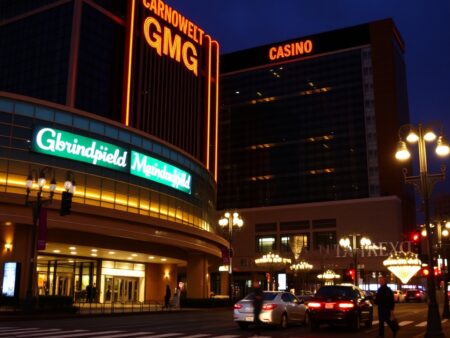
[IMAGE_PLACEHOLDER_1]Experts suggest that the Macau Casino Slump is not just a temporary dip but a structural change. The reliance on “junkets”—middlemen who bring in high-net-worth individuals—has proven to be a dangerous vulnerability.
As these junket operators face legal scrutiny, the flow of VIP capital has dried up. This has left luxury resorts with empty tables and declining occupancy rates.
The Role of China’s Regulatory Crackdown
The primary catalyst for the current crisis is the aggressive crackdown by the Chinese government on capital flight. Beijing views large-scale gambling as a conduit for moving money illegally out of the country.
This political climate has created an atmosphere of fear among the “whales” who once drove the industry. The Macau Casino Slump is a direct result of these strict anti-corruption campaigns.
Furthermore, the tightening of visa restrictions has limited the ease with which mainlanders can enter the territory. This logistical hurdle has stifled the recovery of mass-market tourism.
To understand more about how regulations affect the industry, you can visit Wikipedia for a detailed history of Macau’s gaming laws.
How Policy Impacts the Macau Casino Slump
Government policies regarding money laundering have become significantly more stringent. This has forced operators to implement rigorous KYC (Know Your Customer) protocols.
While these measures are legal, they discourage the anonymity that high-rollers prize. This psychological barrier is a hidden driver of the Macau Casino Slump.
The Decline of the Junket System and the Macau Casino Slump
The junket system was once the backbone of the region’s wealth. Now, many of these operators are under investigation or have fled the country.
Without these intermediaries, casinos struggle to attract the elite players who bet millions. This void is a primary pillar of the Macau Casino Slump.
Economic Indicators Behind the Macau Casino Slump
When looking at the financial reports, the Macau Casino Slump is evident in the plummeting GGR (Gross Gaming Revenue). The numbers show a consistent decline in VIP contributions.
Retail and hospitality sectors have also suffered. When people stop gambling, they spend less on luxury shopping and fine dining.
[IMAGE_PLACEHOLDER_2]Employment rates within the gaming sector have fluctuated wildly. Many workers have been laid off as resorts scale back operations to save costs.
Investment in new infrastructure has also slowed. Developers are hesitant to build new resorts while the Macau Casino Slump persists.
For a perspective on how other markets handle these shifts, read about how the Baton Rouge casino market beat the odds.
Shift Toward Online Gaming Alternatives
As land-based options become riskier or less accessible, players are migrating toward digital platforms. The Macau Casino Slump has accelerated the adoption of online casinos.
Online platforms offer the anonymity and convenience that the current Macau environment lacks. This shift is permanent and global.
Players can now access world-class games from the comfort of their homes. This has diminished the allure of traveling to a physical destination during a Macau Casino Slump.
Many users are exploring high-quality sites like 5bet to find the excitement they used to seek in Macau.
The technology behind online gaming has evolved to include live dealers and immersive VR experiences. These innovations make the Macau Casino Slump even more pronounced as traditional venues struggle to compete.
Comparing the Macau Casino Slump to Global Trends
While Macau struggles, other gaming hubs like Las Vegas and Singapore are diversifying. They are focusing on “integrated resorts” that prioritize entertainment over pure gambling.
The Macau Casino Slump highlights the danger of over-reliance on a single demographic. Diversification is the only way to survive long-term volatility.
We can see similar volatility in other markets where legal battles occur. For example, some regions face hurdles like those seen in the Bay Area casino ruling.
However, the scale of the Macau Casino Slump is unique due to the sheer volume of capital involved. The ripple effects are felt in global financial markets and luxury goods sectors.
Official reports from Bloomberg emphasize that the political risk in Macau is now a permanent factor for investors.
Digital Transition and the Macau Casino Slump
The transition to digital is not just a trend; it is a survival mechanism. The Macau Casino Slump is pushing operators to think about omnichannel strategies.
By integrating physical presence with digital apps, casinos hope to recapture lost revenue. However, the legal landscape in China remains a significant obstacle.
Regional Competition and the Macau Casino Slump
Nearby hubs in Southeast Asia are attempting to capitalize on the Macau Casino Slump. Countries like Cambodia and the Philippines are attracting displaced players.
These regions offer different regulatory environments that may feel less restrictive to some. This regional competition further drains Macau’s market share.
Future Outlook for the Macau Casino Slump
Will the Macau Casino Slump end, or is this a new normal? Most analysts believe that a full recovery to 2019 levels is unlikely.
The focus is now on attracting non-gaming tourists. Macau is attempting to rebrand itself as a cultural and leisure destination rather than just a gambling hub.
[IMAGE_PLACEHOLDER_3]This pivot is necessary to mitigate the effects of the Macau Casino Slump. By focusing on arts, museums, and family entertainment, they hope to stabilize their income.
However, the core of their economy remains the casino. If the Macau Casino Slump continues, the government may need to offer significant tax incentives to operators.
We are seeing a trend where players prefer decentralized and secure platforms over traditional land-based options. This is why the Macau Casino Slump is likely to persist for several years.
The integration of cryptocurrency and blockchain in gaming is also playing a role. These technologies provide a layer of privacy that is currently missing in Macau.
As long as the political climate remains tense, the Macau Casino Slump will remain a cautionary tale for the global gaming industry.
Conclusion
Macau Casino Slump serves as a stark reminder of how political instability can dismantle a multi-billion dollar industry overnight. The combination of China’s crackdown and the rise of online alternatives has created a perfect storm.
For players and investors, the lesson is clear: diversification is key. Relying on a single market or a single method of play is a risky strategy in the modern era.
While Macau attempts to pivot toward tourism, the legacy of the Macau Casino Slump will be felt for a generation. The era of the unchecked high-roller in Macau may officially be over.
Ultimately, the industry will move toward a more balanced approach. Whether through digital innovation or cultural diversification, the goal is to avoid another crisis like the Macau Casino Slump.
Read More








Recent News




Recent Gambling News